
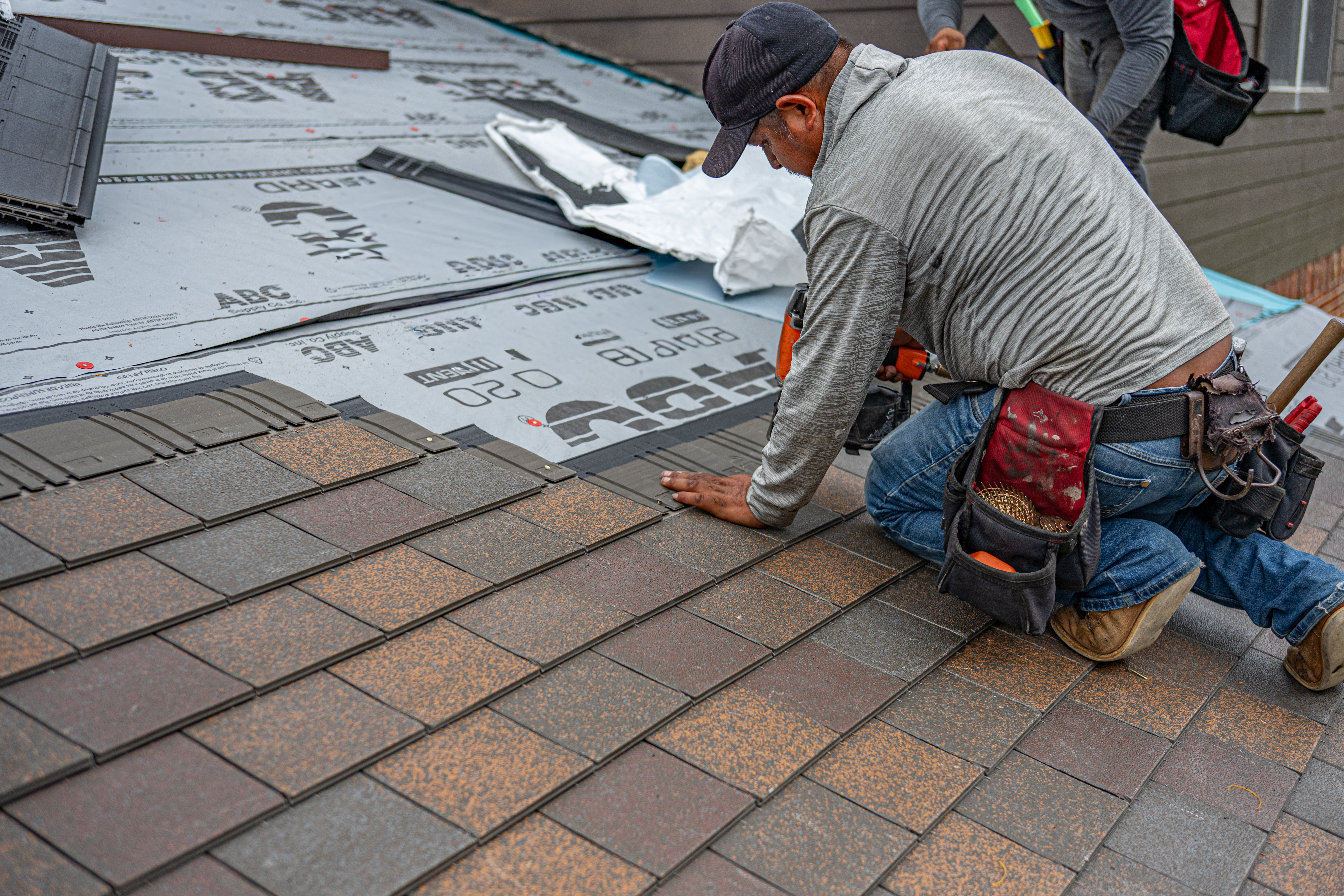
When your roof is damaged by a storm, the insurance process can be confusing. Homeowners often assume the first thing they should do is call their insurance company, but in my experience, that is not always the best place to start.
The first thing I recommend is having a qualified roofing professional inspect the property before you file a claim.
A roofer who regularly deals with storm damage knows what to look for, including damage that may not be obvious from the ground. They also understand the terminology insurance companies use and can help document what actually happened to the roof.
That does not mean every damaged roof automatically qualifies for a complete replacement. It means you should understand what is actually going on before beginning the insurance process.
Get Your Roof Inspected Before Calling Your Insurance Company
One of the biggest pieces of advice I give homeowners is simple: have the roof assessed before contacting your insurance company.
When we inspect a roof, we are trying to determine what was damaged, what may have caused that damage, and whether there are issues that could become bigger problems later.
We also know what insurance companies typically look for and how roofing damage needs to be explained and documented.
After that assessment, you can contact your insurance company and decide whether filing a claim makes sense.
And getting an inspection does not mean you are obligated to hire that particular roofing company. You can have us assess the roof and then decide whether you want to hire us or someone else.
The important part is having a knowledgeable set of eyes on the property before the insurance process gets underway.
Storm Damage Is Not Always Obvious
A common misconception is that if your roof is not leaking immediately after a storm, nothing is wrong.
Unfortunately, roofing damage does not always work that way.
Some problems can take months to become noticeable. A storm may weaken part of the roofing system without creating an immediate leak.
That is why a good inspection should involve more than looking for obviously missing shingles.
We Look at the Interior Too
When possible, we also inspect areas such as the attic.
Inside, we may find evidence including:
- Water staining
- Signs of previous or active moisture
- Areas where water may be entering
- Damage that is not easily visible from the exterior
Sometimes the first indication that something is wrong with the roof is actually underneath it.
It is also important to determine whether water is actually coming through damaged roofing or whether another exterior maintenance issue is contributing to the problem. Gutters, for example, can overflow or drain improperly and create water problems around the roofline. We explain some of those warning signs in our guide to what gutter polishing is and why your gutters may need attention.

Wind Damage Can Be Hidden
Wind damage is another area homeowners may not notice.
A shingle does not have to be completely missing to have been damaged.
Strong winds can affect the fasteners underneath the roofing material. Fasteners can begin pulling out, or the shingle itself can pull against the nail and widen the nail hole.
That can essentially begin tearing the shingle away from its fastener.
From the ground, the roof may still look relatively normal. Up close, however, you may have a weakened area and potentially a place where water can eventually enter.
Granule Loss Can Become a Bigger Problem Later
One of the things I pay close attention to is the granular surface of asphalt shingles.
Granules help protect the roofing material from UV exposure. When shingles experience significant granule loss, the damage may not look dramatic immediately.
But that missing protection can matter over time.
The sun continues hitting that exposed area. Eventually the shingle can discolor, deteriorate and become more likely to fail.
That means something that seems minor immediately after a storm can eventually contribute to a leak.
Granule loss can have causes other than storm damage as well. For example, roof algae and organic growth can contribute to deterioration over time. We go deeper into that issue in our article on what causes black streaks on a roof.
The important part during an insurance inspection is determining what damage appears consistent with the storm versus normal wear, maintenance issues or pre-existing deterioration.
A Real Claim Where Granule Loss Was Initially Minimized
I have dealt with this exact issue during an insurance claim.
A previous inspection had overlooked or minimized areas of granule loss because they did not appear to require an immediate repair.
During our inspection, we identified the affected areas and explained why the damage could contribute to premature deterioration.
There was initially some pushback, but we worked with the homeowner to document the issue and explain what that loss of protection meant for the shingles.
Ultimately, those damaged materials were included and replaced.
That is exactly why I believe a roof inspection needs to look at more than one question:
"Is it leaking today?"
You also need to ask what the damage has done to the roofing system and whether it has created an area that is much more likely to fail in the future.
Have Your Roofer Present When the Insurance Adjuster Inspects the Roof
Another mistake I see is homeowners allowing the insurance adjuster to inspect the roof completely alone.
Insurance adjusters have a job to do, and many do that job very well. But the adjuster is still representing the insurance company.
I recommend having someone there who understands roofing and can represent the homeowner's side of the inspection as well.
Your roofing professional can point out areas of concern, explain what was found during the original inspection and make sure potentially important damage is not unintentionally overlooked.
That is especially valuable for homeowners who do not know roofing terminology or would not know what questions to ask.
You want two knowledgeable sets of eyes looking at the property.
The goal should not be to fight with the adjuster. It should be to make sure the inspection is thorough and that everyone is looking at the same information.
Don't Wait Too Long to File a Roof Damage Claim
Waiting too long can be just as problematic as filing a claim without knowing whether you actually have storm damage.
If a storm comes through and you do not have an immediate leak, it is easy to assume everything is fine.
Then six months or a year later, water starts entering the home.
Now you may be trying to connect that leak to a storm that happened a long time ago.
Insurance policies can have deadlines for reporting damage, completing work or recovering additional claim funds. Those requirements vary, so you need to review your own policy rather than assuming you have a certain amount of time.
That is another reason I recommend having the roof inspected after a significant storm even when everything appears okay from the ground.
Finding the damage early gives you the opportunity to document it while the storm is still recent.
Don't Make Major Repairs Yourself Before the Inspection
If water is actively entering the house, you obviously need to take reasonable steps to protect the property from additional damage.
A temporary tarp may be necessary to stop an active leak until repairs can be made.
What I would avoid is attempting significant roofing repairs yourself before the roof can be properly evaluated and documented.
There are two big reasons.
First, you can accidentally cause more damage than you started with.
Second, once materials have been moved, removed or repaired, it can become harder to show exactly what the original storm damage looked like.
The same principle applies to cleaning a roof after damage. A homeowner should not grab a pressure washer and start blasting shingles because they are trying to get a better look at them. Asphalt shingles generally require a much gentler approach. Our guide to pressure washing vs. soft washing explains why high pressure can cause its own damage to roofing materials.
Protect the home from additional damage, but let qualified professionals handle the actual roofing work whenever possible.
Be Careful With Storm-Chasing Roofing Companies
After a major storm comes through an area, homeowners will often start receiving knocks at their doors from roofing companies.
Some of those companies may be perfectly legitimate contractors.
The concern is with companies that simply follow major storms from one community to another.
They may not be based anywhere near your area. Once the storm work dries up, they move on to the next city.
Before signing anything, find out who you are actually working with.
Look for a contractor that is properly insured, reputable and available after the job is finished.
A roof replacement is not something you want handled by a company that may be several states away if you discover a problem six months later.
Understand Why Your First Insurance Check May Be Lower Than the Roof Replacement Cost
This is probably one of the most misunderstood parts of an insurance roofing claim.
Let's use a simple example.
Suppose replacing your roof will cost $13,000 and your insurance deductible is $1,000.
A homeowner might assume the insurance company will simply issue a $12,000 check.
That is not necessarily how the claim is paid.
With many replacement-cost policies, the insurance company initially accounts for depreciation based on factors such as the age of the roof, condition and materials being replaced.
For our example, let's say the insurer determines that the depreciated value of that $13,000 roof is currently $8,000.
After subtracting the $1,000 deductible, the homeowner may initially receive around $7,000.
This is where people can make an expensive mistake.
Your First Insurance Payment May Not Be Your Entire Settlement
A homeowner receives that $7,000 check and immediately thinks:
"I guess I need to find somebody who will replace my roof for $7,000."
That is not always true.
If your policy provides replacement-cost coverage with recoverable depreciation, some of the approved money may be held back until the work is actually completed and the cost is documented.
Using our same example, let's say you hire a reputable, properly insured contractor and the completed roof costs $10,000.
Depending on the approved claim and the terms of the policy, you may then be able to submit that documentation to the insurance company and recover additional depreciation that was withheld from the first payment.
That is essentially the "second check" that many homeowners do not realize may be available.
The important thing is that it is not automatic with every policy or every claim. You have to understand what your policy covers and follow the insurance company's requirements.
Before choosing a roofer based on the amount of your first check, find out:
- Whether you have replacement-cost or actual-cash-value coverage
- Whether depreciation is recoverable
- How much depreciation has been withheld
- What documentation must be submitted after the work
- How long you have to complete the repairs
- How long you have to request recoverable depreciation
- What your deductible is
- What amount and scope the insurance company actually approved
Do not assume your first insurance check tells you the entire story.
Don't Choose a Roofer Based Only on the Amount of the First Check
This ties directly into recoverable depreciation.
If your insurance company initially sends you $7,000, it can be tempting to start searching for someone willing to replace the entire roof for exactly $7,000.
But roofing costs are based on labor, materials, insurance, proper installation and the actual scope of work—not simply the amount of that first insurance payment.
You still want a reputable and properly insured contractor doing the job.
Trying to force a $10,000 or $13,000 scope of work into a $7,000 budget may mean finding somebody who is cutting corners somewhere.
Before making that decision, understand whether additional approved funds may be available after the work is completed.
Know the Difference Between Roof Damage and Roof Maintenance
Not every problem you see on a roof is an insurance claim.
A roof covered in black streaks, moss or algae may need professional maintenance rather than storm-related repairs. Normal deterioration and neglected maintenance are also very different from damage caused by a covered weather event.
That is why the inspection comes first.
If the roof itself is still in good condition but algae, moss or staining is beginning to affect the shingles, our professional roof cleaning service in Cincinnati and Northern Kentucky uses a low-pressure soft-wash process designed for asphalt roofing rather than damaging the shingles with high pressure.
The goal is to determine what your roof actually needs—not to turn every roofing problem into an insurance claim or automatically assume the roof needs to be replaced.
How to Give Your Roof Insurance Claim the Best Chance of Going Smoothly
There is never a guarantee that an insurance company will approve a particular roof repair or replacement. Coverage depends on your individual policy, the cause of the damage and the extent of that damage.
But homeowners can put themselves in a much better position by approaching the process correctly.
I recommend:
- Have the roof professionally inspected after a significant storm.
- Get that assessment before filing the insurance claim when possible.
- Document visible damage and interior signs of water.
- Avoid major DIY repairs before the damage has been documented.
- Take reasonable temporary steps to prevent additional damage when necessary.
- Check your insurance policy for reporting, repair and claim deadlines.
- Have your roofing professional present during the adjuster's inspection.
- Ask questions when damage identified during your inspection is missing from the insurance estimate.
- Understand your deductible and how depreciation was calculated.
- Ask whether withheld depreciation is recoverable.
- Find out exactly what you need to submit to receive any remaining approved funds.
- Do not assume your first insurance check is the maximum amount available.
- Choose a reputable, properly insured contractor instead of simply finding someone willing to match the first check.
The Goal Is a Complete and Accurate Roof Inspection
The insurance process does not have to become a battle between the homeowner, roofer and insurance company.
The goal should be making sure the roof is inspected thoroughly, the damage is accurately documented and the homeowner understands what their policy actually provides.
One of the biggest advantages of having an experienced roofing professional involved early is simply having somebody who knows what to look for and how to explain it.
A missing shingle is easy to see.
A widened nail hole, pulled fastener, attic stain or damaged granular surface may not be nearly as obvious.
Those details can matter.
If your area has recently experienced hail, high winds or severe weather, do not wait until water starts dripping through the ceiling to wonder whether your roof was damaged.
Have it inspected, understand what you are dealing with, and then make an informed decision about the next step.