
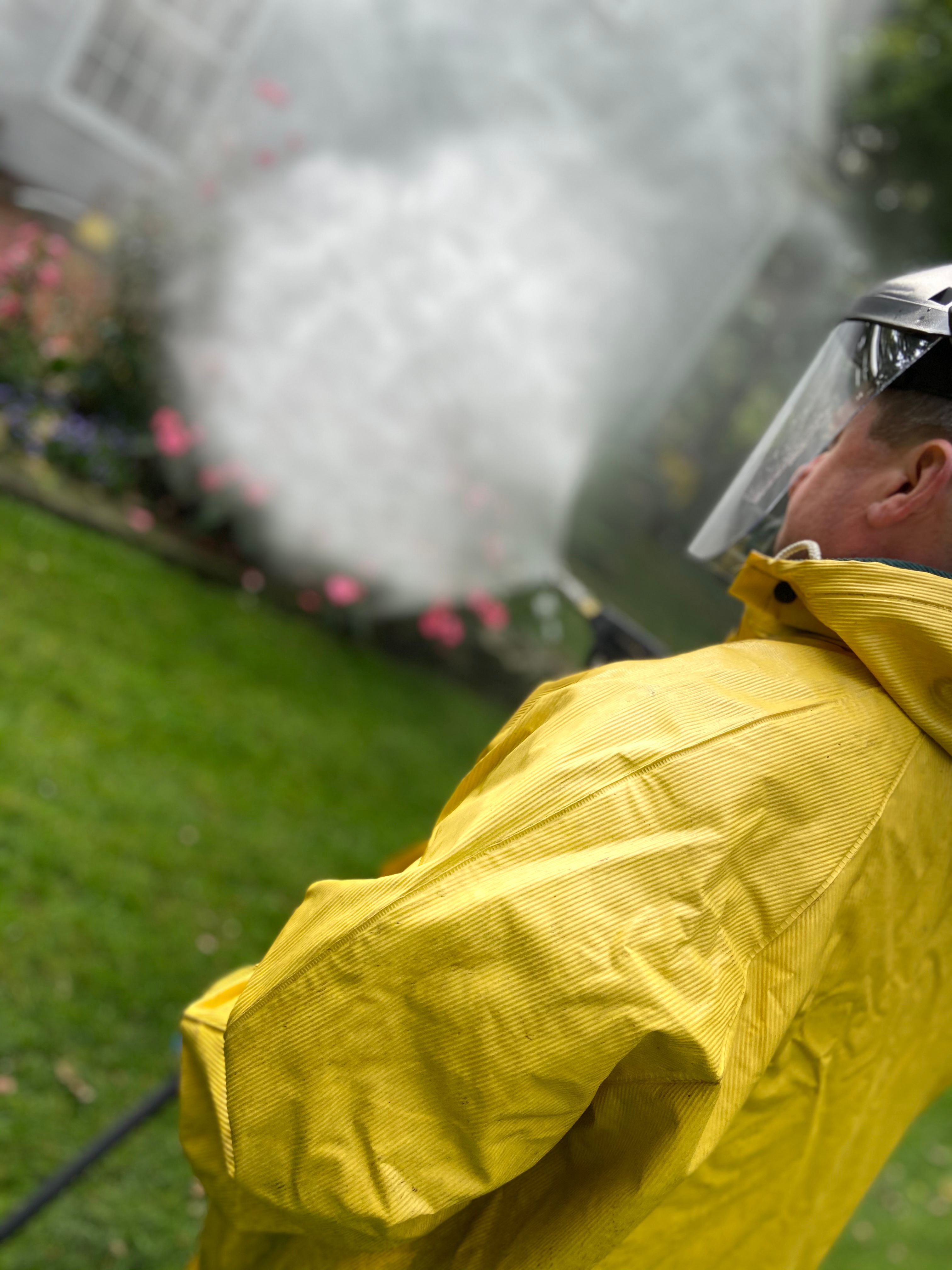
Pressure washing and soft washing are both effective ways to clean exterior surfaces, but they work very differently. The right method depends on the surface, its current condition, and what needs to be removed. At Kings of Clean, we do not automatically use the most powerful equipment available. A deeper cleaning is not worth it if the process damages the customer's property. We inspect each surface first and choose the method that will provide the best possible result without creating unnecessary risk.
What Is the Main Difference Between Pressure Washing and Soft Washing?
The simplest difference is how each method removes dirt and buildup. Pressure washing relies primarily on the physical force of highly pressurized water. It pushes dirt, stains, grease, and other buildup away from the surface. Soft washing uses low-pressure water combined with professional cleaning solutions. Those solutions break down stains, remove dirt, and kill organic growth before everything is gently rinsed away. Think of pressure washing like using the jet setting on a garden hose, except multiplied many times over. Soft washing is closer to coating the surface with a cleaner, allowing it time to work, and then rinsing it with pressure similar to a regular hose. Neither method is automatically better. The best option is the one suited to the particular surface and problem.
How Does Soft Washing Work?
Soft washing depends more on the cleaning solution than the force of the water. At Kings of Clean, we commonly use a professional bleach-based solution to attack algae, mold, mildew, and other organic growth. Foaming agents help the solution cling to vertical surfaces, such as siding, instead of immediately running off. Once the solution has had enough time to work, the surface is rinsed using low pressure. This removes the loosened dirt and organic material without blasting the surface. Soft washing is especially valuable when we need to clean and treat organic growth without damaging a delicate material. It does more than remove the buildup you can see. The solution helps address the living organisms responsible for the discoloration. For example, we may soft wash a house before it is painted. This helps remove dirt and organic growth so it is not trapped beneath the new layer of paint.
What Surfaces Should Be Soft Washed?
For siding and other delicate exterior materials, our professional house washing service combines an effective cleaning solution with a low-pressure rinse to remove organic growth without risking unnecessary damage. Soft washing is usually the safer choice for delicate surfaces or materials that could be damaged by a powerful stream of water. We commonly recommend soft washing for:
- Asphalt shingle roofs
- Vinyl siding
- Painted exterior surfaces
- Stained or painted decks
- Wood fences
- Aging brick or paver patios
- Surfaces with cracks, deterioration, or loose material
An asphalt roof is one of the clearest examples. Using excessive pressure can damage the shingles and potentially leave the homeowner facing thousands of dollars in repairs or replacement costs. Vinyl siding can also be damaged by high pressure. Water may get forced behind the siding, paint can peel, and the material itself can be marked or damaged. Decks and fences require similar care. Too much pressure can scar the wood, raise the grain, and strip away paint or stain. Soft washing lets us clean these surfaces while reducing the risk of damaging the wood or its existing finish.

How Does Pressure Washing Work?
Pressure washing uses the physical force of water to lift and remove stubborn buildup. Different surfaces and stains can require different amounts of pressure, which is why proper experience and equipment matter. We may also use professional cleaners such as sodium hydroxide when dealing with certain difficult stains and buildup. Unlike soft washing, the process generally uses less foam and relies more heavily on the combination of the cleaner and physical water pressure. Pressure washing works well for problems that a soft wash solution alone may not remove, including:
- Oil stains
- Grease
- Embedded dirt
- Rust staining
- Years of accumulated surface buildup
A soft wash may improve the appearance of these areas, but it may not have enough physical force to remove deeply embedded stains. Pressure washing helps push that material out of the surface.
What Surfaces Can Be Pressure Washed?
Pressure washing is generally better suited to strong, durable surfaces that are in stable condition. Examples can include:
- Concrete driveways
- Brick patios
- Patio pavers
- Certain metal surfaces
- Other durable masonry or hardscape surfaces
Even these materials should not be pressure washed without an inspection. Brick and pavers may appear strong from a distance, but deteriorating mortar, loose joints, cracks, or previous damage can make high pressure risky. The surface material tells us what might be possible. Its actual condition helps us decide what is safe.

How We Choose Between Pressure Washing and Soft Washing
Before beginning a job, we inspect the surface and consider two main questions:
- What condition is the surface currently in?
- What type of dirt, stain, or growth needs to be removed?
If a surface is already cracked, loose, deteriorating, or showing signs of damage, we are more likely to choose soft washing. If we are uncertain, we generally lean toward the safer, lower-pressure option. However, the material that needs to be removed also affects the decision. Organic growth can often be treated effectively through soft washing. Oil, grease, rust, and deeply embedded stains usually require more pressure or a specialized cleaning process. In some cases, the answer may involve a combination of methods. Different sections of the same property may require completely different approaches.
A Paver Patio That Changed Our Original Plan
One job that stands out involved a paver patio. At first glance, half of the patio appeared to be in good condition, and we originally expected to pressure wash it. Once we inspected the entire patio more carefully, we began noticing cracks. Some of the mortar between the pavers was deteriorating and beginning to turn into sand. Could pressure washing have removed more of the visible staining? Absolutely. It also could have blasted away more of the deteriorating mortar and accelerated the damage. We changed our plan and chose a soft wash instead. The soft wash removed minor buildup and treated the organic growth between the cracks without placing unnecessary force on the weakened mortar. The patio was left cleaner and in good condition without increasing its existing deterioration. That job is a perfect example of why the strongest cleaning method is not always the best cleaning method. Our responsibility is not simply to remove the greatest possible amount of staining. It is to improve the property without causing the homeowner a much larger problem.
Is Soft Washing Better Than Pressure Washing?
Soft washing is better for delicate surfaces, painted or stained materials, roofs, organic growth, and areas showing signs of deterioration. Pressure washing is better for durable surfaces in good condition and for stubborn materials such as oil, grease, rust, and deeply embedded dirt. The best exterior cleaning company should be comfortable using both methods. If someone plans to use the same level of high pressure on your roof, siding, fence, deck, and driveway, that should raise concerns. A professional should be able to explain:
- Which method will be used on each surface
- Why that method is appropriate
- What cleaning solution may be needed
- How nearby plants and property will be protected
- What limitations or existing damage they noticed
Why the Lowest Pressure-Washing Bid Can Be Risky
Pressure-washing equipment is easy to purchase. Proper training, insurance, surface knowledge, and experience are much harder to acquire. Someone can buy a pressure washer, create an LLC, put a magnetic sign on a vehicle, and begin offering exterior cleaning services. That does not necessarily mean they understand how different materials respond to pressure or how to protect a customer's property. An unusually low bid may sometimes mean the contractor plans to use high pressure on everything to finish the job faster. It could also mean they do not carry appropriate insurance. If someone damages your siding, strips your deck, removes mortar from your patio, or ruins your roof, the repair could cost far more than the amount saved by accepting the lowest quote. Price matters, but it should not be the only factor.
Questions to Ask an Exterior Cleaning Contractor
Before hiring someone to pressure wash or soft wash your property, ask a few direct questions.
Do You Carry Property Damage Liability Insurance?
Do not simply ask whether the business is insured. Confirm that its coverage includes property damage liability. This coverage helps protect both the homeowner and the contractor if something goes wrong. A professional company should be comfortable answering the question and providing proof of insurance when requested.
Which Cleaning Method Will You Use?
Ask which surfaces will be pressure washed and which will be soft washed. The contractor should be able to explain why each method was selected. Be cautious if the answer is simply that everything will be pressure washed.
How Will You Protect My Plants?
Exterior cleaning solutions can affect grass, flowers, shrubs, and other landscaping if they are not handled properly. Plants should be pre-wet before cleaning and rinsed during and after the process when necessary. At Kings of Clean, plant protection is part of planning the job, not an afterthought.
How Do You Handle Chemical Runoff?
Ask how the company manages runoff from its cleaning solutions. The answer may depend on the property, drainage, surrounding landscaping, and the products being used. A responsible contractor should know where the water is going and take appropriate steps to protect the property.
Do You Offer a Regrowth Warranty?
This is especially important for roof cleaning and other services intended to remove organic growth. Ask whether the company provides any warranty against regrowth, what the warranty covers, and how long it lasts. Make sure you understand the terms before the work begins.
Choosing the Right Cleaning Method for Your Property
The difference between pressure washing and soft washing is not simply strong pressure versus weak pressure. They are two different cleaning processes designed for different surfaces and types of buildup. Soft washing uses professional cleaning solutions and low-pressure rinsing to treat dirt and organic growth. Pressure washing uses controlled physical force to remove stubborn stains and embedded buildup from durable surfaces. The right decision requires inspecting the surface, identifying what needs to be removed, and recognizing any existing damage. Sometimes that means accepting that a gentler cleaning will remove less staining because protecting the property is more important than forcing a perfect-looking result. At Kings of Clean, we choose the process based on what your property actually needs. If you are unsure whether your roof, siding, deck, fence, driveway, or patio should be pressure washed or soft washed, contact us for an evaluation. Call Kings of Clean at 513-806-9077 or visit cleanmyexterior.com to learn more or request exterior cleaning service.
